
The Girl in the Bubble
Illustration by Meghan Zhang.
Let me ask you a couple of questions: What three fictional characters do you see yourself in? What qualities and arcs do they possess that are reflective of your own? We tend to answer these questions with individuals that we can relate to on an empathetic level. Perhaps we focus more on the positive traits we share with them, or even the similar hardships we have gone through. Now, let me ask you a more specific question: What is a character that you relate to in terms of their negative characteristics? A question like this can be a bit trickier to answer, as it requires us to be self-aware of our own faults and weaknesses. Film and TV shows tend to portray their antagonists in a distasteful light, making it easy to separate ourselves from these types of characters.
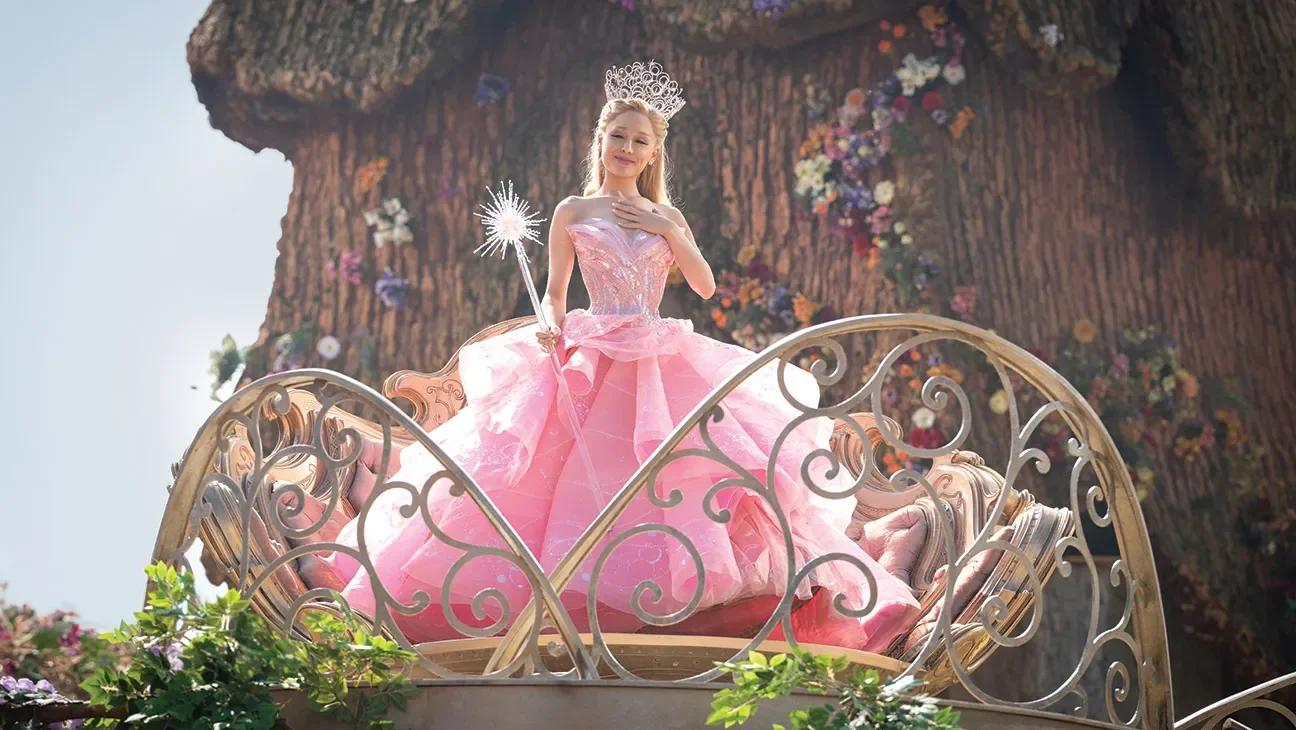
In particular, one fictional character that has gained notable relevance in recent years is Galinda Upland. Appearing in the Broadway musical Wicked (2003), as well as the film duology of Wicked (2024) and Wicked: For Good (2025), the character of Galinda, or better known as
Glinda, has become one of the most polarizing figures of recent fictional media. As someone who loves to watch character analysis videos online, I noticed that viewers and consumers of Wicked often fall on one extreme side of a spectrum. On one hand, many view her as a sympathetic character who is justified in her actions, while on the other, she is seen as purely a villain. In my opinion, Galinda’s role within the story is much more nuanced than these takes, serving more as a cautionary tale for those who choose ignorance in the pursuit of power. The path she follows is highly reflective of one that many in our own reality take and is naturally a warning to those who may see themselves in her.
The Galinda in Wicked:
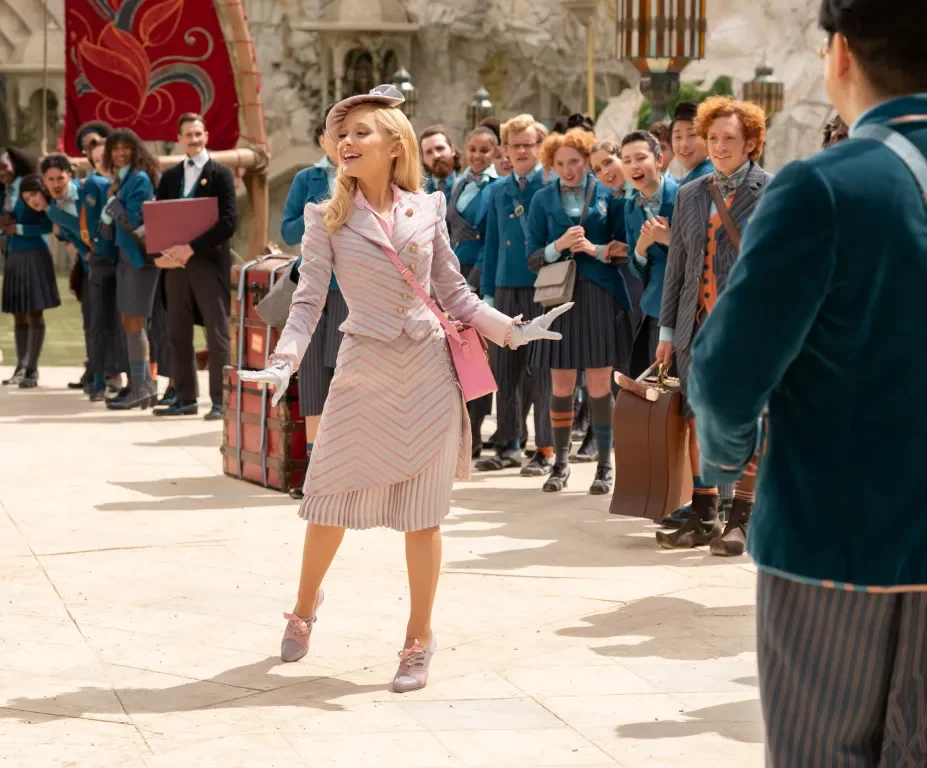
In the first act of Wicked, Galinda is characterized as vapid, ambitious and performative, blithely ignorant to the more serious problems of the world due to her privileged upbringing. Particularly, she embodies a specific type of privilege that allows her to treat the world as a stage for her own social advancement. She arrives at Shiz University (where most of the first act takes place) with an inherent expectation of special treatment, viewing her beauty and status as natural justification for her leadership. The privilege that Galinda holds manifests itself as a profound, self-serving ignorance to the political issues within Oz society, including discrimination against animals. Her apathetic reaction to such oppression is a prime example of her refusal to see the world beyond her ambitions. The prominent social issues circling within Oz are not of any actual concern to her, as the treatment of the animals does not directly impact her and therefore does not hold importance to her. In the rare case of Galinda acknowledging the animals, she does so with condescension.
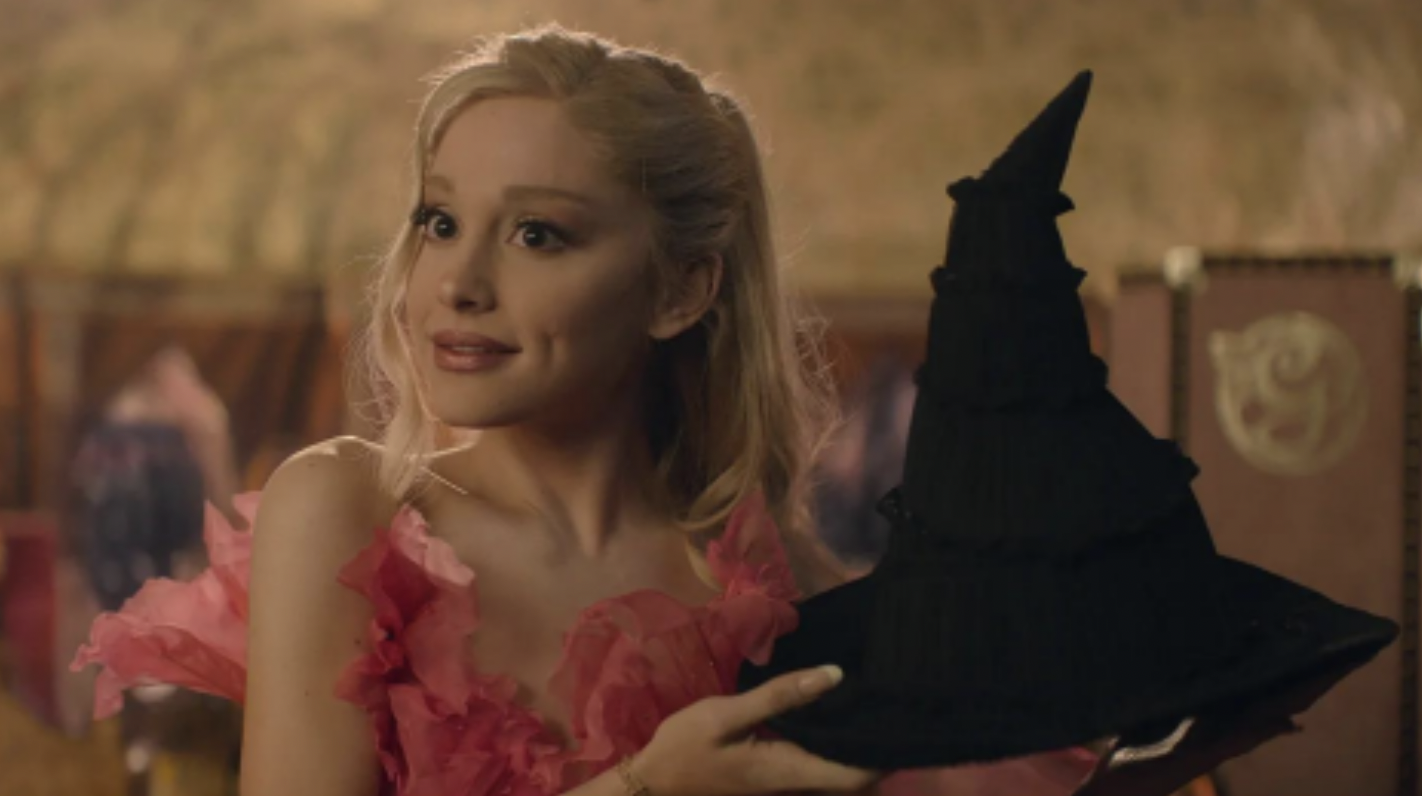
In one scene, she complains about Dr. Dillamond’s, a goat professor at Shiz, inability to pronounce her name correctly due to his physical differences as an animal. Galinda’s primary concern at this moment is that Dillamond cannot correctly pronounce her name, rather than any meaningful or sympathetic acknowledgment of his physical disability. Even her eventual decision to change her name to "Glinda" is purely an act of performative solidarity. While framed as a tribute to Dillamond after he is captured in an act of animal oppression, the act is primarily motivated by her desire to impress her peers. She takes advantage of a tragedy to uplift her own public image, effectively discarding what could have been a genuine moment of political action and in favour of her own gain.
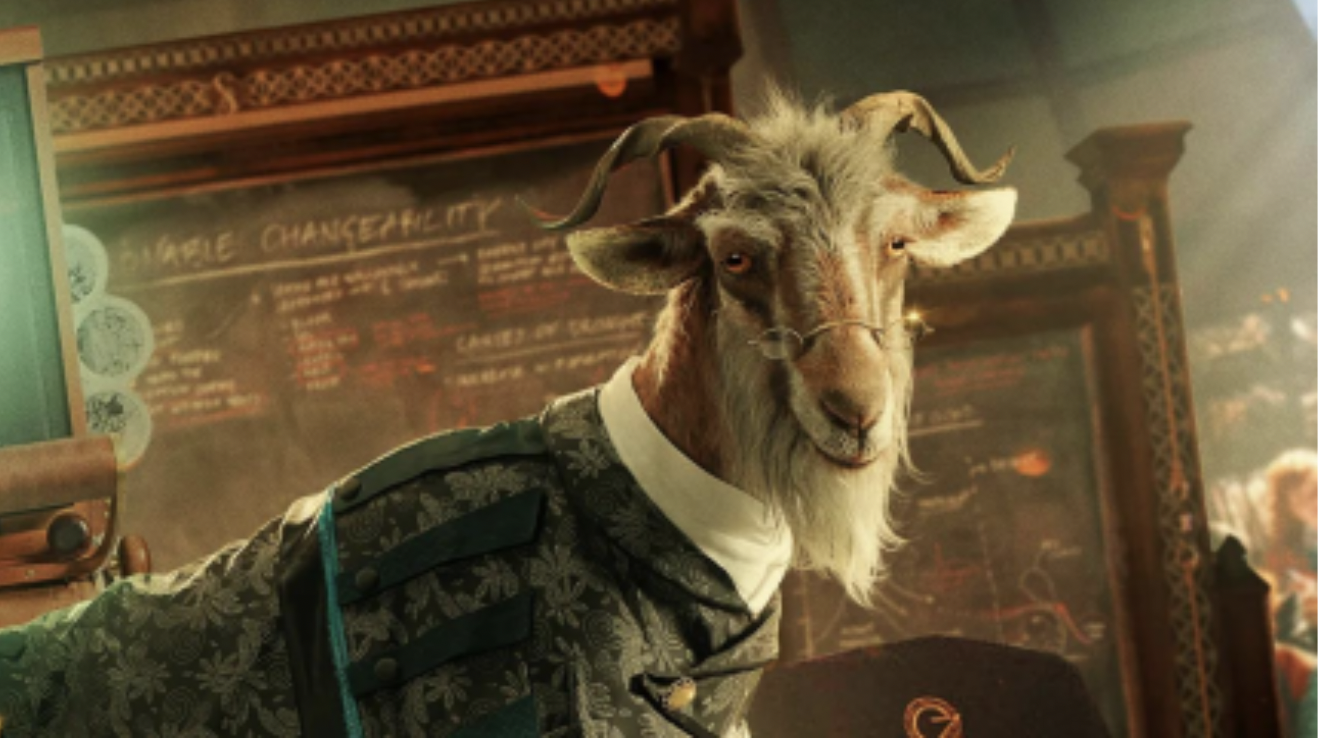
Galinda’s characterization in Wicked demonstrates the ignorance that can come out of a privileged life. She views relevant political issues and discrimination as something "under the surface" that does not impact her and therefore does not require her attention. When she is occasionally faced with the reality of these political issues, she expresses a particular distaste for them, even viewing them as mere inconveniences to her or opportunities to steal the spotlight.
The Galinda in Our World:
Pieces of media such as Wicked can often seem so fantastical and exaggerated that we, the viewers, feel inclined to separate ourselves from the characters and themes being presented to us. Galinda Upland, one of the most over-the-top and theatrical figures in the stage play and film duology, is often treated as one of these characters. Despite her dramatic antics and luxurious lifestyle, however, the political ignorance she represents is far too reflective of the reality that many of us live in the present. In an era where social media continues to enhance visibility, you might think that the general awareness of political issues would increase as it becomes easier than ever to consume information. Unfortunately, society continues to suffer from an ignorance to these social and political issues, reflective of the lack of awareness displayed through Galinda. I, for instance, would like to believe that I am properly educated on relevant issues in our world today.However, I can also acknowledge that there are many things I remain ignorant of. While it would beimpossible to be fully educated on every prevalent topic, it is vital that we all make a conscious effort to keep ourselves informed. Unlike Galinda, we must use our access and privileges to help others rather than merely ourselves. The character of Galinda also calls out the prominent issue of performative activism in our society, with her shallow acts of political correctness lacking any meaningful change outside of boosting her own image. Harkening back to the moment in which she changed her name from “Galinda” to “Glinda”, many of us are guilty of attempting to project an image of social awareness without taking the time to educate ourselves. For instance, 2020 saw a huge trend for Instagram users to post black squares with the caption “#blackouttuesday” in solidarity with the Black Lives Matter movement. In the years that followed, I have seen many people online admit that they had no idea what this trend even represented, and that they merely participated because they felt inclined to. While a trend such as this is not inherently performative, it is valid to call into question whether it was being used for its intended purpose, or simply a way for many people to do the bare minimum of activism. This type of performative activism is also present on a much larger scale, as it has become a running joke about how corporations love to change their profile pictures on social media to the pride flag during June to present an image of social awareness. Such a meaningless act, along with the copious amounts of pride-themed merch, are rendered shallow and pointless as most of these companies do not go much farther than this to enact change. Similarly to Galinda, many individuals and corporations alike are guilty of using social issues and topics to uplift their own image rather than making a meaningful difference. The character of Galinda Upland serves as a cautionary tale of the ignorant bystander. Her actions within the story of Wicked illustrate that ignorance is a choice, one that stems from a place of privilege. By focusing on her own image and comfort over the fundamental rights
of oppressed groups, she serves as a harsh reflection of the reality that many of us are living in. If we are to avoid falling into the same corruptive pits of ignorance, we must learn from her story and make an active decision to stay educated and speak up for those who need it. Only by acknowledging our own capacity to become like Galinda can we begin to truly open our eyes to important social issues and hopefully improve the world.