365 Recession Girl: The Recession’s Impact on the Revitalization of 2000s/2010s
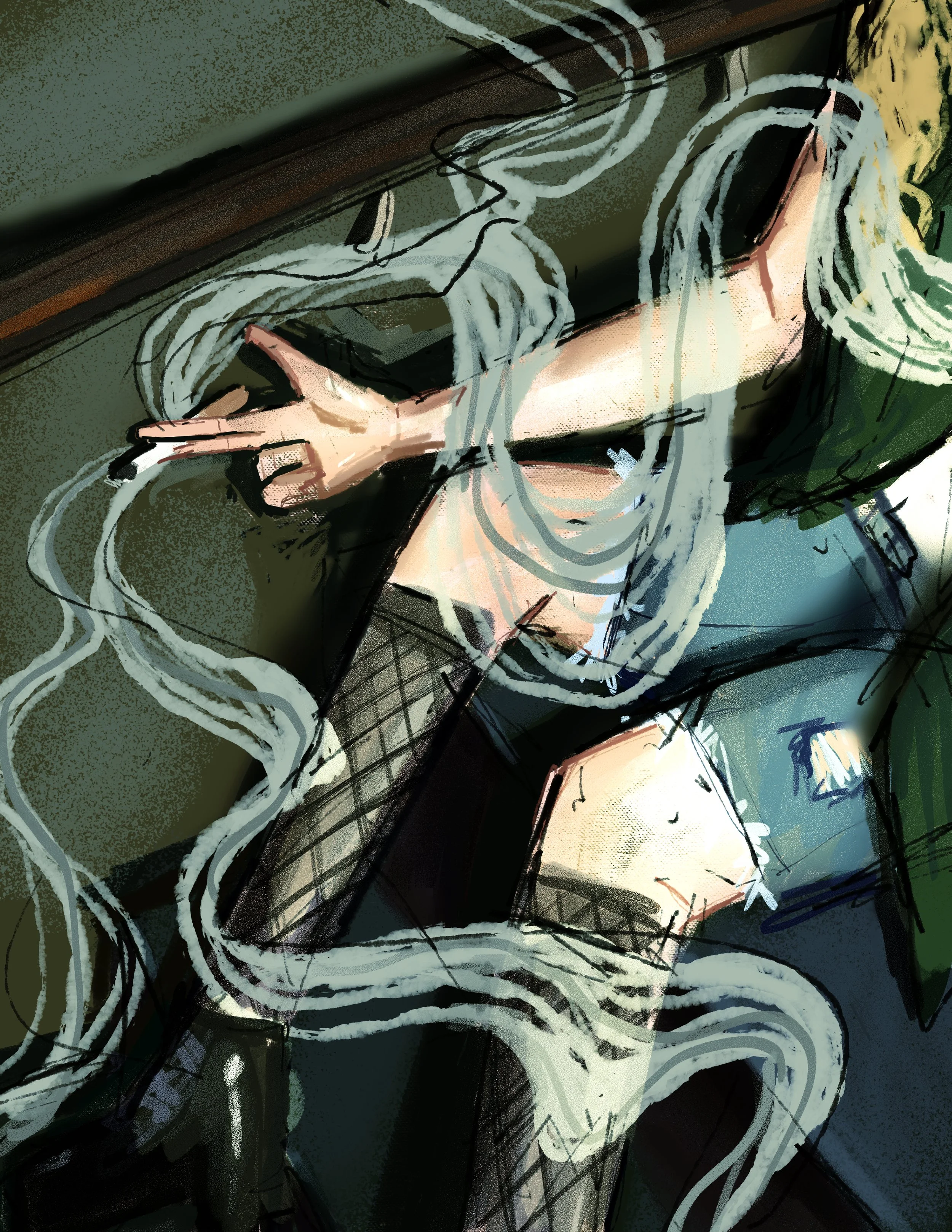
Illustration by Meghan Zhang.
Tighter and flashier. Loud but minimal. Clothing that speaks volumes, despite the lack of fabric.
This is what Gen Z demands. We experienced a recession at the beginning of this decade, but what differentiates the style then from five years later?
The economic and political shift, particularly in America, can be seen as one of the key factors in kick-starting the revitalization of the “Indie Sleaze” movement. Originally beginning in the late 2000s, this fashion movement emerged in response to the 2008 financial crisis, as many had
either lost their jobs or experienced hefty pay cuts. People no longer had the financial means to purchase new, extravagant clothing, opting for a simple and minimalistic style. Companies followed suit, as they could not afford to continue manufacturing intricate and elaborate clothing, given the dwindling demand due to sky-high pricing. MySpace and Tumblr promoted this minimalist movement, as it displayed Millennials’ creativity with their closets. Mismatching outfits with muted colours, office wear turned minimal and casual, and everything in between, all captured with the flash of a digital camera.
America has entered a new era of political leadership, and as a result, major economic shifts have occurred, leading to the U.S. entering its most significant recession since the 2008 financial crisis. Similar to Gen Z’s predecessors, our pockets have become empty as employment rates decrease, and subsequently, salaries. With the widespread use of current social media, such as TikTok and Instagram, young people have been sharing their creativity with their closets, echoing Millennials’ use of rotating minimalist staple pieces.
The recession, alongside fashion cycling, has catapulted the revitalization of the “Indie Sleaze” trend. It is a well-understood phenomenon that fashion trends and styles often cycle every 20 years, but what makes this movement hit so close to home? The recession is the most significant indicator, as it makes this trend feel even closer to home for Gen Z, as we find ourselves not only enjoying the same trends that we were too young to experience first-hand, but we also live in a mirrored economic crisis. From the countless TikToks that get published of old Tumblr GIFs to reposts of old party photos taken in the late 2000s, Gen Zers are suckers for nostalgia, especially now that we are at the age where we can actively participate in so much of the media we consumed while we were younger.
Will trends continue to cycle throughout this impending recession, or will we be stuck in this movement until our pockets can recover? For now, I will continue to soak up this clothing nostalgia while proudly wearing my skinny jeans.