Rock Gods and Rebellion
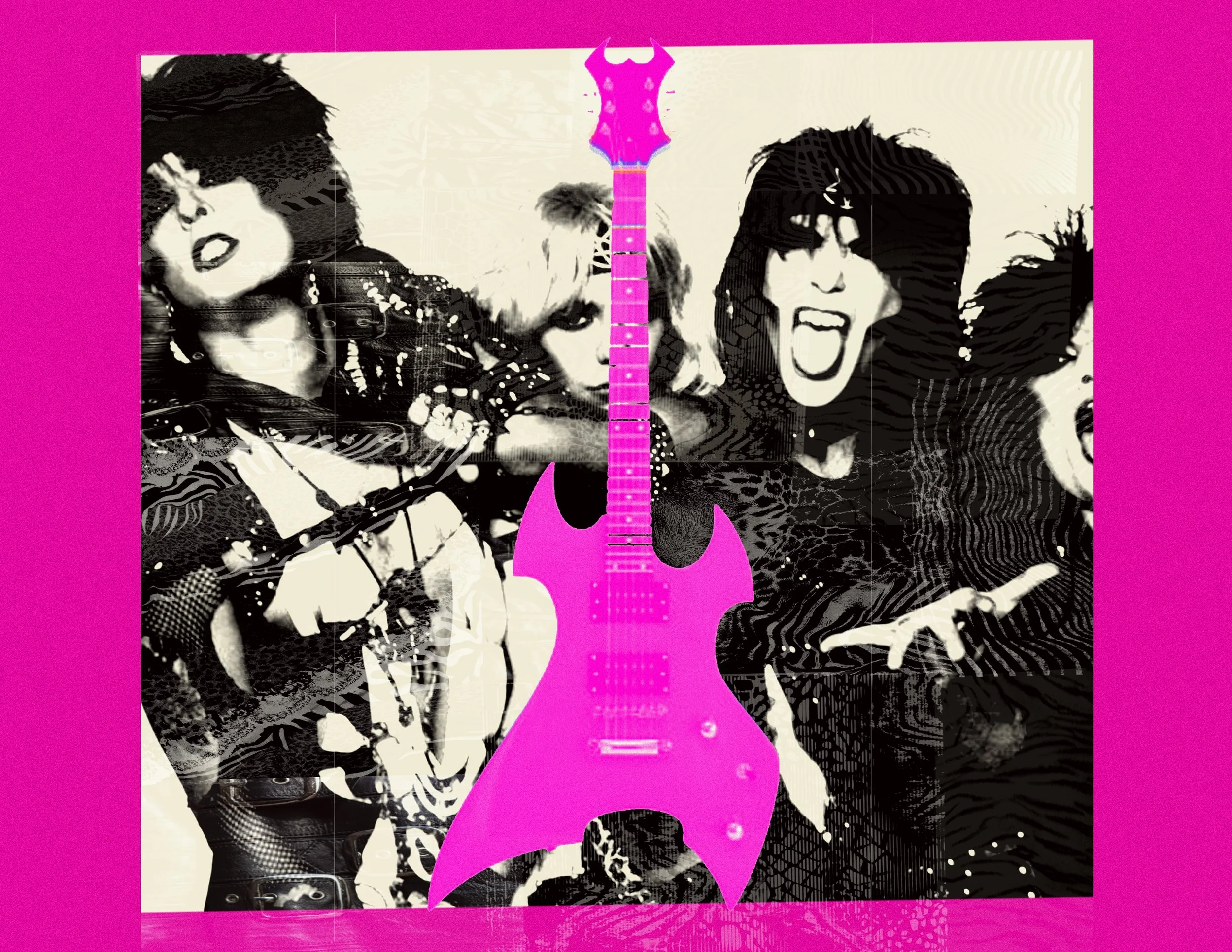
Illustration by Jayda Korn.
When I was a teenager, rock stars felt like mythical creatures.
They were products of an era I wasn't a part of, but was hungry to learn more about. I became obsessed with them and learned about their humble origins and rises to fame, years and years after most had lost most of their relevancy. I admired their unconventional costumes and larger-than-life personalities. I watched every music video I could find, even if the frontman’s face was 5 pixels wide on the highest setting.
Eventually, I began to understand the nuances of loving this genre. There is a joke among fans about how more likely than not, your favourite band will have some kind of controversy surrounding them. This could be anything from a drug charge and destroying a hotel room to abuse and murder. Separating the artist from the music becomes difficult when rebellion and excess are so deeply ingrained in the culture around the music and in the music itself. Rock music has always lived somewhere between myth and reality. The controversies shape rock just as much as the music does.
In many ways, rock stars all seem to be driven by an intense need to be rebellious. Their notoriety became a huge part of their appeal and identity. In 1989, Billy Idol caused $250,000 in damages after a three-week bender in a Thai hotel and was escorted out of said hotel after being tranquillized by the Thai military. Ozzy Osbourne allegedly snorted a line of ants off the ground as if they resembled a fine powder. Outrageous stories like these reinforced the idea that big personalities are more marketable. Horrible behaviour didn’t hurt careers; it built them!
This image of rebellion not only inspired the youth but terrified adults. Your parents may have told you tales of the “Satanic Panic”, a movement popular in the early 80s to early 90s. There was a widespread belief that satanism was on the rise, with over 12000 cases of alleged Satanic Ritual Abuse (SRA) documented during this period. The rise of music with lyrics incorporating violence, sex and the occult was thought to have a part in this, and was regularly targeted. Hysteria had taken hold of many parents at the time, parents who believed their children would become human sacrifices in the local woods, all because of an affinity for rock and roll. My mom tells me stories about how my grandma would throw out my uncle’s rock records. She believed they were something dark and dangerous.
It was a product of the time; parents typically don't enjoy what their kids are listening to.
Chances are, if you were to show your parents the newest Playboi Carti track, they would tell you to “turn that garbage off” and that it's probably making you do… something negative. The reaction to new music, transformative sound, is usually the same. Jazz was once treated the same as rock music—rebellious, sultry, and not fit for impressionable young minds.
The same music that was once treated as evil and terrifying by parents in a past generation is now celebrated and revered by parents of our generation. If you look at the comment section under any music video older than 20 years, you'll find a cascade of comments declaring how “they just don't make music like they used to”.
Nostalgia is powerful. Through it, we can cherish tunes that are important to musical history while acknowledging the problematicity of its leading musicians. Rock stars were never meant to be role models. They were meant to be larger than life. Maybe that's why we talk about them like they are.