If Artists Are So Politically Outspoken, Why Are They Creating Apolitical Art?
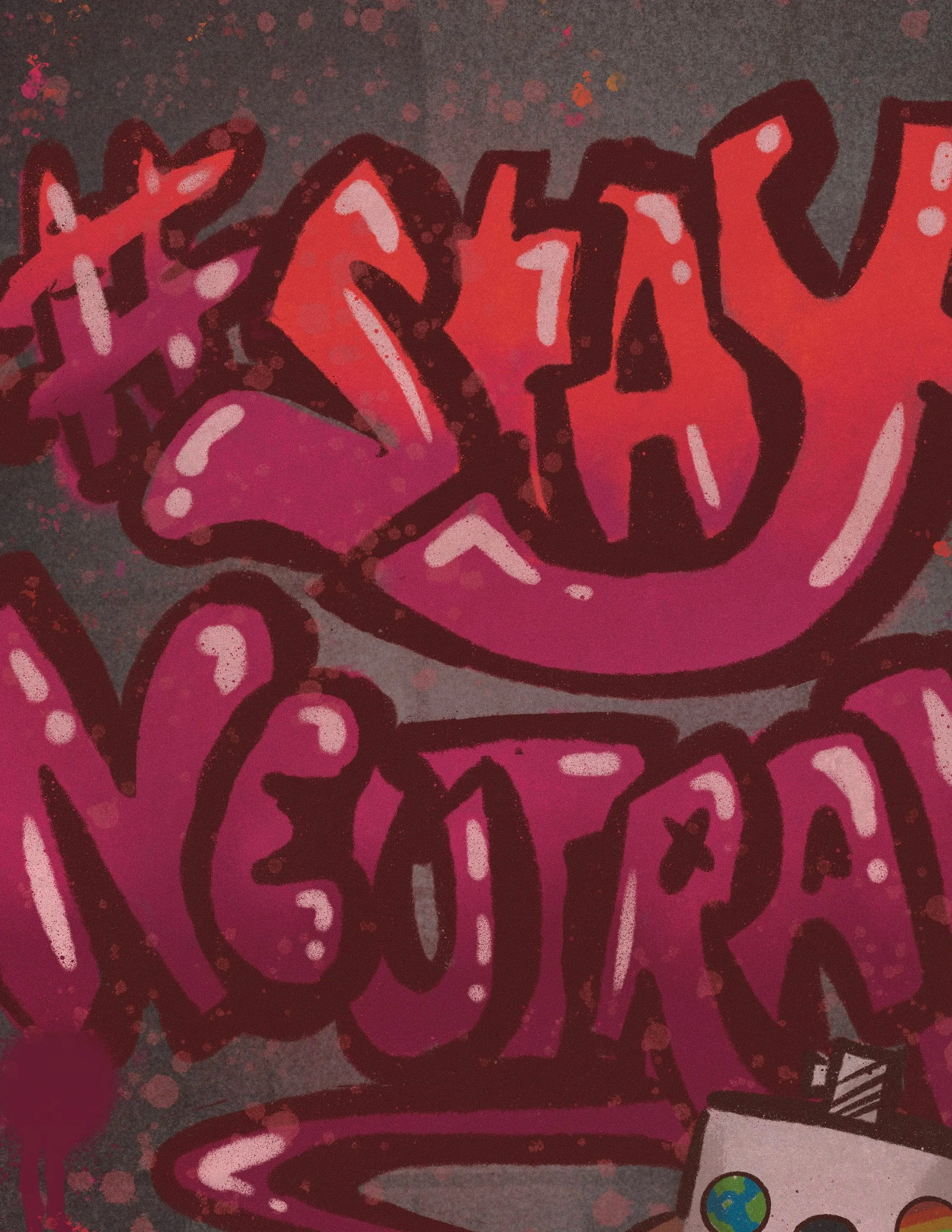
Illustration by Baran Forootan
Musicians, actors, filmmakers, and visual artists have long been outspoken on political and social issues. But nowadays, something feels different.
This year alone has been full of political advocacy from our favourite artists. At the Academy Awards, stars used their acceptance speeches to support Ukraine and condemn antisemitism. In September, after the Trump administration pressured ABC to suspend Jimmy Kimell from air, 400 actors, musicians, and film directors signed an open letter calling it a “dark moment for freedom of speech” in America. And today, over a thousand musicians—including Lorde and Björk—are boycotting Israel through the “No Music for Genocide” campaign.
Despite this political outspokenness, I can’t help but feel that we are lacking works of art that actually make a social or political difference. Many of today’s most popular artists seem eager to declare their support for particular causes but uninterested in producing art that advances the issues they so loudly champion.
It wasn’t always this way. A decade ago, Lady Gaga wore a meat dress in protest of the U.S. military’s “don't ask, don't tell” policy, which barred openly gay, lesbian and bisexual Americans from military service. Months later, she topped the charts with “Born This Way,” which became the era’s defining gay anthem, calling for the acceptance of queer people. While the song may seem innocuous today, in 2011—four years before same-sex marriage was legalized nationwide—“Born This Way” sent a bold political message to a mainstream America that still upheld discriminatory policies against gay people.
Compare this to Sabrina Carpenter’s VMA performance this year, where backup dancers held signs reading “Protest Trans Rights” and “In Trans We Trust.” Carpenter was praised by some for standing up for trans rights, but without a political message in her music to underpin her advocacy, the gesture felt vapid. I am not suggesting that all artists make art which advances social causes. We do not need a song from Sabrina Carpenter about trans rights. But noticing this contrast has made me ask why, in our current moment—when political and social issues consume so much of our culture—so few political works of art have risen to the top.
This question is especially puzzling when you consider the role art has played in shaping Western culture over the past century. Classic protest songs like Sam Cooke’s “A Change Is Gonna Come” and Bob Dylan’s “Blowin’ in the Wind” became defining anthems of the U.S. Civil Rights Movement, sung and played at marches demanding racial equality. TV dramas in the 1990s and 2000s shifted cultural perceptions—Sex and the City normalized conversations about women’s sexuality, while Queer as Folk helped bring gay lives into the mainstream. In the 2010s, political visual art, such as Banksy’s Girl with a Balloon, became universally recognized and was used to draw attention to humanitarian crises in the Middle East. Ten years ago, Kendrick Lamar’s To Pimp a Butterfly topped the charts with powerful commentary on Black oppression and identity, and its single “Alright” became a rallying cry for Black Lives Matter and anti-Trump protestors.
I recognize that plenty of artists are still making political art, and that some have even broken through with loud political statements. Take the band Kneecap from Northern Ireland, whose music explores Irish republicanism, as one example. Although these artists have been successful in drawing attention to their causes, their work feels like siloed forms of cultural resistance rather than expansive ideas that have permeated culture and swayed the mainstream.
I have several theories about why our most popular artists today seem uninterested in producing political art.
First, the channels which once made reaching the mainstream accessible—radio, movie theatres, magazines—are now becoming obsolete. Most people are now fed media through algorithms which reinforce their own opinions and beliefs, making it harder for artists to reach audiences outside of their base. If artists can't reach people with different worldviews and challenge their beliefs, why even attempt to create art with a political message?
Second, many artists assume that people are politically jaded. They feel it is more lucrative for them to create an escape in their art than to engage in the culture’s ongoing political battles.
Third, some artists have concluded that sharing their opinions does little to change anything. After seeing how their endorsements of Kamala Harris failed to prevent a second Trump presidency, they have assumed that no one wants to hear their political views.
Whatever the reasons, it seems our most visible artists have forgotten their true power, which lies not in endorsing candidates or giving speeches, but in using their craft to tell untold stories, give voice to the voiceless, and compel mainstream audiences to confront their own hypocrisies and prejudices.
It’s a common adage that artists are mirrors—they reflect the world as it is. I agree. But they are also navigators—guiding us through the turbulent waters of our culture and leading us to our next destination.
It’s a shame that in today’s culture, desperate for better leaders, so few artists are stepping up to steer the ship.