
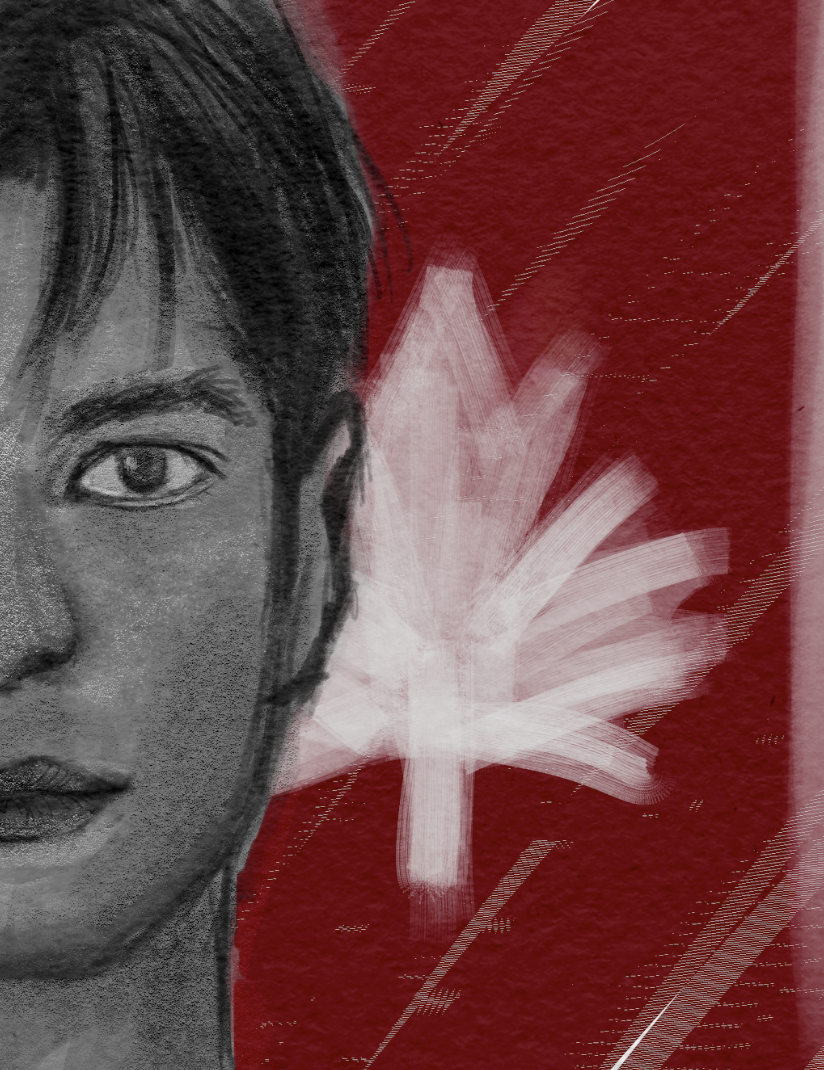
Illustration by Iman Jafrani
When I was 5 years old, I was dropped off to Kindergarten on a brisk January morning and sat down in front of a group of strange looking stuffed animals. Confused but still curious, I would soon come to learn that these funny-looking figures were the mascots for the upcoming 2010 Winter Olympics, right on our doorstep in Vancouver. The following weeks were filled with the excitement of athletes arriving to Vancouver and preparations taking place downtown to watch the larger-than-life torch on Waterfront be set ablaze the day of the opening ceremony. If memory serves, there were also some infamous red mittens with a maple leaf on their backs involved as well.
Years later, I look back on this time fondly as a fun way to honour amazing people in Canada and somehow now, a TV show about gay hockey players invoked the same feeling.
Heated Rivalry, originally a book series by Canadian author Rachel Reid and now adapted for a Canadian streaming service by a Canadian director, has become a pivotal piece of Canadian creativity. Feel free to take a shot every time I use the word “Canadian” in this article. My friends and I have joked more than a couple times that watching the show has made us feel somewhat patriotic; that we feel proud to be from the country that brought this amazing story to the world stage, that we feel connected to the characters, especially the angsty moments in a half-dingy Montreal night club most of us have had at one point or another. Cheesy, I know, and it is not lost on me how strange it is for a show about gay hockey rivals to incite feelings of pride in one’s home country. Yet, almost similar to hearing your favourite song come on in a grocery store, or travelling abroad just to bump into someone from your hometown, seeing Canada be so present at every point in this story fostered some warm familiarity.
As a slight disclaimer, I’d first like to clarify: this is not a case for extreme Canadian nationalism. Canada is far from being a perfect nation, and there is still a lot of work to be done and progress to be made. Highlighting the arts and how Canadian people aid them is at the center of this instance. This show has incited this feeling in me that Canadian creative projects absolutely deserve to be recognized and appreciated more on the world stage. Seeing the success of art that is local and familiar to a place is an exciting feeling, not entirely dissimilar to the swell of pride we occasionally grant ourselves when a young Canadian athlete places first on the world stage. Thinking back to the Vancouver 2010 Olympics, seeing athletes on screen compete and win all for the glory of the same place you’re from, is a feeling that can and should be transferred into the arts.
Why, exactly? Well, although pertinent to representation and the plot of the show, there is a meaning deeper than drama and sex. Heated Rivalry gave a large opportunity for Canadian actors to showcase their amazing skills that, if controlled by American companies like HBO, probably would have been ignored for the likes of Austin Butler or Jacob Elordi (no hate to the Elvis boys). Shot entirely in Western Ontario with a small production budget and a filming schedule of exactly 37 days, this project looks like it was never supposed to work on paper. And yet, it has become the biggest pop culture phenomenon we have seen since the era of Game of Thrones. All owing to Canadian heart, Canadian creativity, and the effort and skill of Canadian people.
I can think of dozens of fantastic contributions to television in recent years that have been Canadian made. Schitt’s Creek hit a massive audience with its audacious comedy, and how easy it is to say “ew, David!” The classic book, “Anne of Green Gables,” was adapted by CBC, quickly turning “Anne With An E” into a favourite among hopeless romantics. In the realm of movies, though catered to perhaps a more niche audience, Scott Pilgrim vs. the World was made and produced in Canada, now also owing to many pieces of pop culture years later. Aside from general popularity points, Canadian Indigenous projects also must be put into the spotlight more. The recent release of North of North onto CBC Gem shows how much more of this perspective is needed in comedy television, especially when it is Canadian homegrown. The “Son of a Trickster” books by Eden Robinson find never-ending intrigue in mysteries of ancestry and small coastal towns. If Heated Rivalry has proven anything, it’s that queer stories are also needed and important in Canada. There have been so many contributions by amazingly talented people from this place to be ignored for the sake of an American alternative.
So yes, watching two fictional hockey players hate each other and start to fall in love on the backdrop of a cottage in Muskoka had its roundabout way of making me appreciate the arts in Canada.
But, is that not the point of all art? To incite feelings of understanding?
And can you honestly say that hearing “What the fuck is McGill?” in a thick Russian accent didn’t make you smile, even a little bit?
