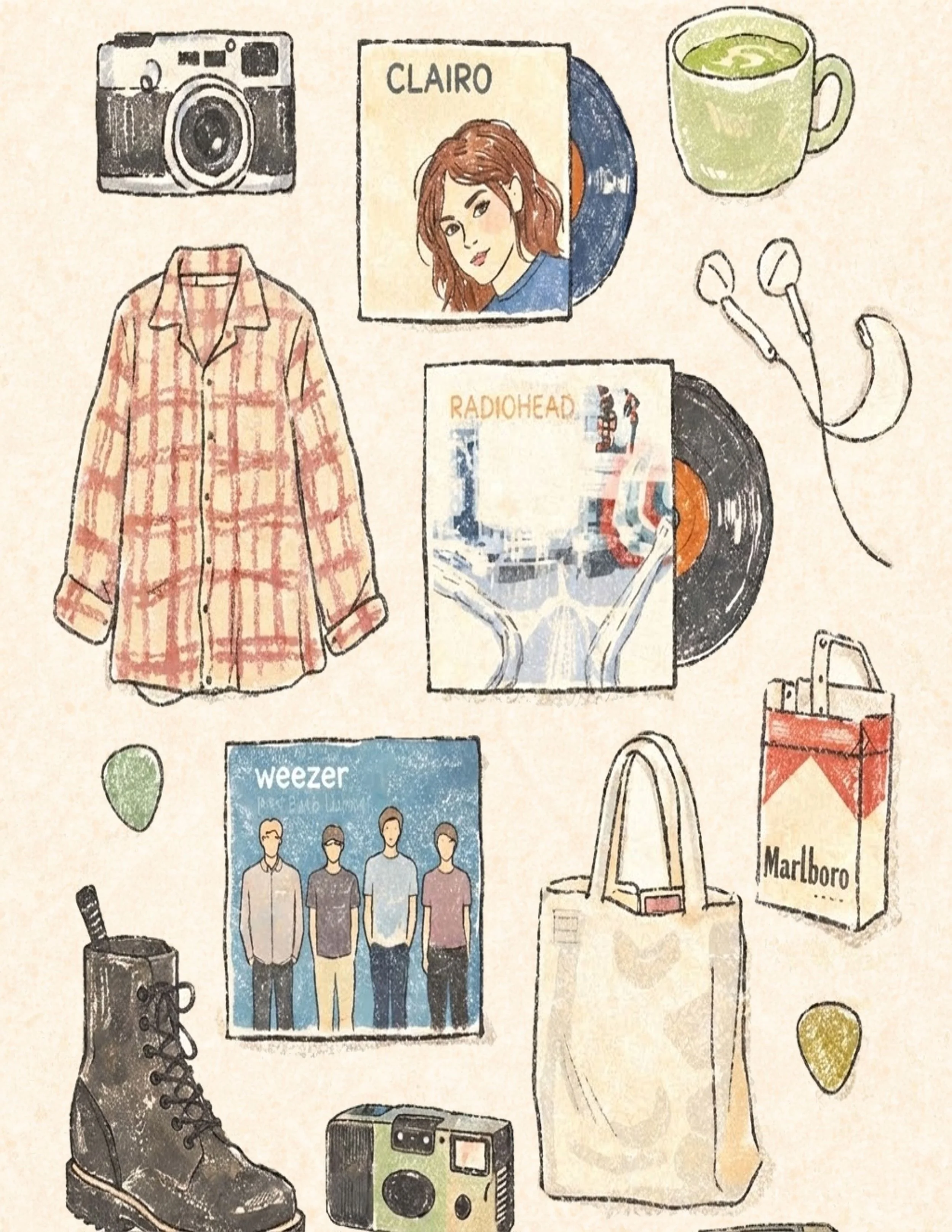
Illustration by Anthony Liang.
From Clairo to Radiohead, Manipulator to Performer
As the 2020s keep trudging on, music has never been so tied to our identities.
In the current musical landscape, music is more readily accessible than ever and there is a wide variety of genres in the mainstream consciousness. Older artists like Kate Bush are being rediscovered, with her song “Running up that Hill” topping the UK charts in 2022, and newer artists like Charli XCX, Sabrina Carpenter and Chappel Roan dominate pop.
Meanwhile, rap and indie continue to produce breakout acts like Geese, Fakemink and Wunderhorse.
With so much variety, it's no surprise that people have begun to label themselves based on what they listen to so that they can stand out from the crowd. Social media makes it easier than ever to find communities with the same interests as you.
When a fanbase or subculture comes into the mainstream, stereotypes tend to follow them. There is now an entire musical subculture surrounding performative men, which only came into existence this past summer. If you were chronically online like me in 2021, you might remember male manipulators as well. Yes, the ones who tell you about niche bands you've never heard of before (Very possibly Nirvana). Both of them have been blown into full on caricatures, branded with not only a look, but a playlist too. Let's look at what it means to “be” a performative man or a male manipulator. What music have these two archetypes taken over? Is the fun these labels provide worth the negative associations to the music?
Male Manipulators
Meet the male manipulator. He’s indie, he’s cool, and he knows every band you can think of… or can't think of. He probably plays guitar and has a killer record collection. He appeared in the midst of the pandemic when most of us were glued to TikTok and Instagram. We began to curate every aspect of ourselves, especially music taste. People expressed themselves through hyper-individualism to stand out in a time where we couldn't see each other.
Do you remember all of the “cores”, like cottagecore or grandmacore that were common during the pandemic? This continues to happen in 2026, just under different branding. We have seen things like the “clean girl aesthetic” come and go in a matter of months. Subcultures such as Goth and Punk used to be based on values of social justice and rebellion, but have now been reduced to makeup and accessories argued over in comment section wars. Music has become like an accessory you can wear, as well as a competition; who can be more niche and cool based on what you listen to?
It's not easy to actually define what a male manipulator is. Do you define him solely on the basis of the certain bands and songs that he likes? Does he need to stay in his room all day logging movies on Letterboxd? Many things can be true at once, but I think the music is the main identifier in this case.
The expectation behind the label “male manipulator” is that men who listen to songs discussing emotional or darker themes are only doing so because they have ulterior motives. A male manipulator separates himself from the rest of the openly misogynistic men to show off how soulful he can be, he's not like the other guys! His brand of misogyny is quieter, but he continues to take advantage of women looking for an escape from the ever-present toxic masculinity found in our society today. By listening to “deep” music and presenting himself as a sensitive soul, he can manipulate women into liking him, and treat them badly after the fact.
This is another example of a highly curated aesthetic I mentioned earlier. A problematic identity was hidden behind a polished pinterest board and a playlist. Though there are men out there who have done and continue to do this, “male manipulator music” is an unfortunate name to give an entire subset of artists. Listening to certain types of music does NOT make you a morally corrupt person, and you should keep spinning that Joy Division album no matter what they tell you.
Performative Men
There are remnants of the male manipulator found in the performative man. He was transformed into an even bigger consumer than before, eager to show off his baggy jeans, wired headphones, and fresh mullet. The individualist social media trends of the pandemic may have been largely online, but the mid 2020s gave these trends a physical appearance. The memes and jokes still exist and now we can see them in person. We want to show off everything we couldn't during the pandemic, and this manifests as having the hottest new thing, listening to the trendiest artist or having a popular new drink in your hand… perhaps a matcha. This is the way trends have always been, and soon enough, something new will become hyper-consumed. How many people can you name off the top of your head who own a pair of Ugg Tazmans or Adidas Sambas? What will be the “It Shoe” of 2030?
We have a much clearer idea of the performative man because of how much the stereotype exists on social media. People were making fun of him left and right. Like our friend the male manipulator, the performative male wants to appear a certain way to women. I’m sure you've seen videos about this type of man reading feminist literature at cafes, while listening to artists with predominantly female fanbases such as Clairo or Beabadoobee. He's performative to women in every sense of the word.
The criticism of this archetype boils down to a lack of authenticity. The only reason he engages with music, media, and style catered towards women is so he can seem both sensitive and cool enough for them to be attracted to. Similar to the male manipulator, he wants to differentiate himself from the alpha male type that has become so popular in recent years. As a result, we don’t know how much of his personality is real and how much is a performance. Is any of it true self-expression? If he has the confidence, he might just get away with it. This trend has led to a lot of people being called performative for having the same taste in music, when they genuinely like these artists.
Beyond the Label
These two specimens are very similar. Both lack authenticity, and both try to win women over using the fronts they put up and the aesthetics they surround themselves with. Music plays a big role in their presentation and overall identity.
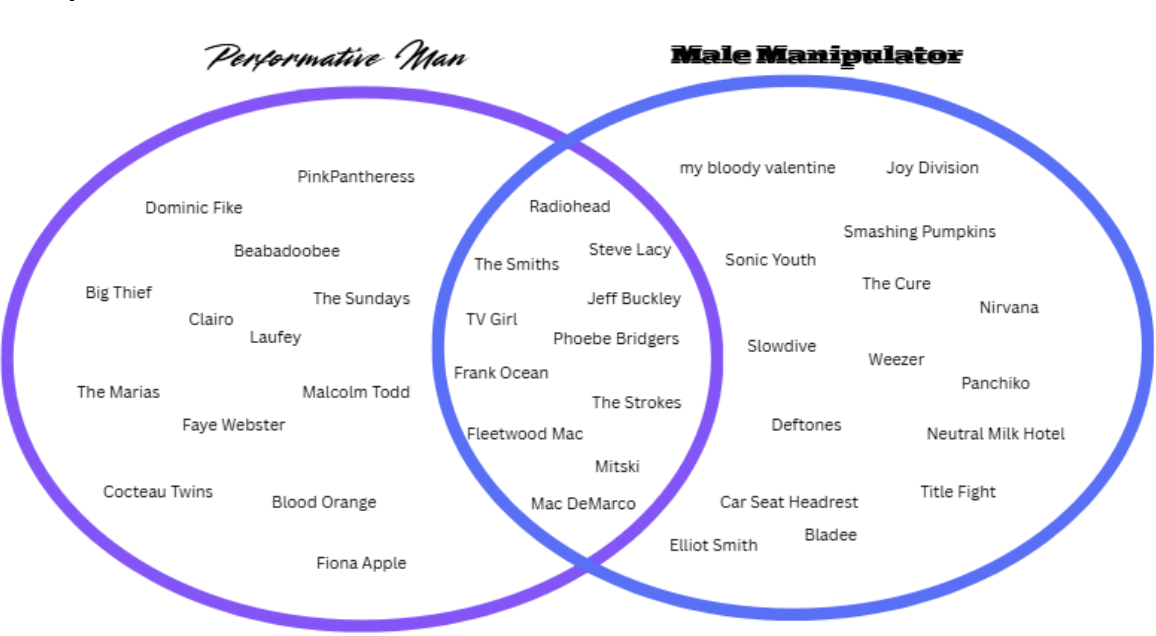
Here is a venn diagram of some of the more popular artists from each man we discussed. You may be saying to yourself, “Oh no, but I listen to all of these!” and feeling annoyed that artists whose work you love are being reduced to a label like this. It should make you annoyed - I know I am! Nobody wants to be labeled as a fake or terrible person for the music they listen to. Unfortunately, there is truth to male manipulators and performative men. Music and culture is a deeply personal way to become closer to others. When people manipulate this system to find their next victim, it's no wonder this music receives the reputation it has. These men can be very real, and the labels are an actual critique on their behaviour while simultaneously being an ironic joke not meant to be taken too seriously. Remember, it's not the music causing this harm, it's the people.
Some of the jokes have spiraled into something a bit more, where even the artists get annoyed. Check out this exchange with Clairo and a fan on Instagram:
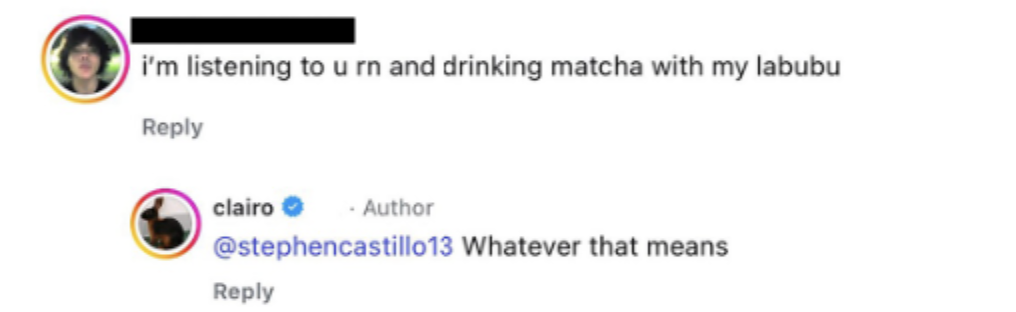
She’s clearly fed up with the jokes about her music being for performative men too, being reduced to a meme rather than a musician. Again, nobody wants to be lumped into a box where you're reduced to matcha and performatively reading feminist literature.
If you're a man who enjoys any of these genres or artists, then that's great! This goes for everyone else too; There is nothing wrong in finding joy and community in music, no matter the genre. If you listen to the same artist as someone else, that's an instant shared connection. It's unfortunate that some people take advantage of this to manipulate and hurt others. We can continue to talk about these types of behaviours with the hope that potential or current victims will recognize what is happening, and to give past victims a space to share their stories.
While online trends can be separate from the real world, we often find them bleeding into our everyday lives. We use these terms in our everyday conversations. It can be fun to call your best friend a male manipulator because of their carefully curated 90s playlists or call your friend a performative male for buying vinyl despite not having a record player, but at the end of the day, does it really matter? Music is just music after all, and although we attribute music to a huge chunk of our identities, do we really need it to say anything about us as people?